

Our Work
A look at the equipment, rooms and routines involved in the studios we plan and commission.
The details behind a studio that runs steadily
-
Gallery desk with vision mixer and monitor wall
The gallery is where signal flow becomes tangible. Sources, preview and programme monitors are laid out so the director and vision mixer can read the whole show at a glance, with labelled controls.
-

Labelled patch bay and cabling
Tidy, clearly labelled patching is the quiet foundation of a reliable studio. Every connection is marked at both ends, which makes faults quick to trace and the system easier to hand over.
-

Camera on pedestal at a news desk
Camera position and lens choice decide how a presenter looks. We set heights, distances and framing for the desk, then agree repeatable marks so operators produce the same shot each day.
-

Acoustic panels and microphone placement
Treatment panels and carefully placed microphones keep speech clean and consistent. We measure the room first, then treat only what the measurements show needs attention.
-
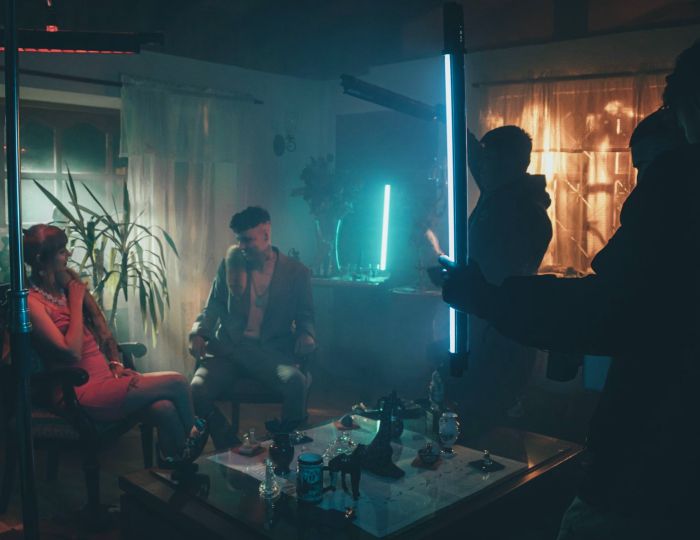
LED lighting rig above an interview set
A lighting plot gives each presenter and guest a consistent, flattering image. Fixtures are placed and balanced against the set, then recorded so the setup can be recreated quickly.
-
Crew reviewing a run-sheet before transmission
Rehearsal and paperwork are part of the work. Run-sheets and checklists are read aloud and tested with the crew, so each person knows their cues before the programme goes live.
What a trendreel studio looks like once it is finished
The studios we work on vary in size, from a compact interview room with two cameras to a larger floor running multi-camera live shows. What they share is that every part has been planned alongside the others, so the gallery, floor, lighting and sound behave as one environment rather than as separate departments.
In practice this is visible in small things. Cables are labelled, camera marks are painted on the floor, microphone positions are written down and the lighting plot is pinned where the crew can find it. None of this is decoration. It exists so the next shift can run the studio exactly as the last one did.
Our consultations often begin with a studio that already works, but unevenly: a room that echoes, shots that change from day to day, a router nobody dares touch. We rarely start from nothing. More often we simplify, document and tidy, then add equipment only where it solves a real problem.
Handover matters as much as installation. We stay until operators have run the studio themselves and the run-sheets match what happens in rehearsal. If a step proves awkward, we change the document or the layout, not the crew's habits, because the best setup is the one people actually follow.
If you would like to discuss a room of your own, the contact page is the best place to begin. A short description of the studio, the crew and the programmes you run is enough for us to suggest a sensible first step.